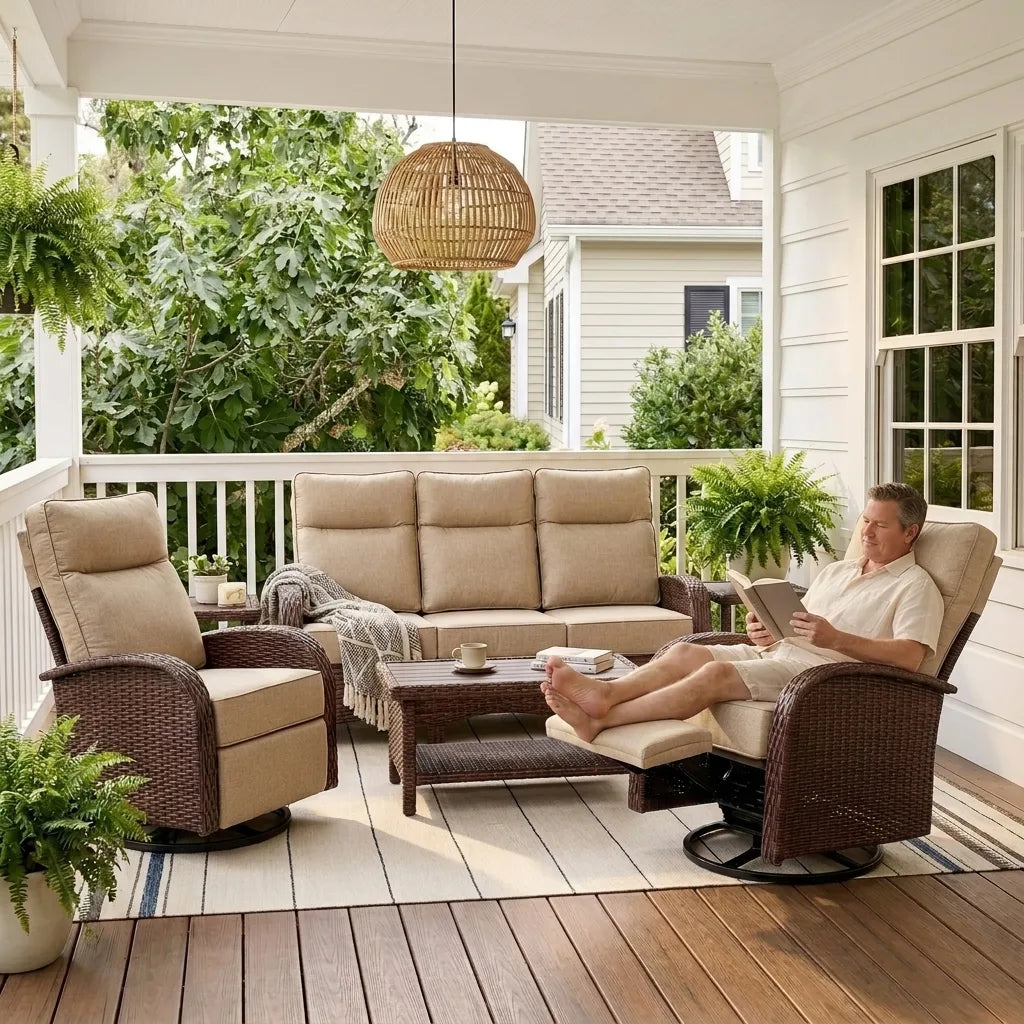
Outdoor wicker furniture and cushions deal with different kinds of everyday mess. Dust, pollen, leaves, and sand can settle inside the wicker weave, while seat and back cushions are more likely to pick up spills, food residue, pet hair, dirt, and moisture.
That also means they should not be cleaned in exactly the same way. The PE wicker frame can handle gentle cleaning with mild soapy water, while outdoor cushions should be kept from becoming unnecessarily wet.
Velscape cushions use everyday outdoor fabric with a water-repellent coating. They can help resist an accidental splash or spill, but they are water-repellent, not waterproof. Spills should be wiped up promptly, and the cushions should not be intentionally soaked or left wet for long periods.
This guide explains how to clean both parts of the furniture correctly: the handwoven synthetic PE wicker, the removable outdoor cushions and covers, and the moving components underneath a swivel glider recliner.
How Should You Clean Outdoor Wicker Furniture and Cushions?
Quick answer: treat the wicker and cushions separately. For PE wicker, remove loose debris first, then clean gently with a soft cloth or soft-bristle brush and mild soapy water. Avoid high-pressure washing.
For outdoor cushions, remove loose dirt and wipe spills promptly rather than soaking the fabric. Velscape seat and back cushions have zippered removable covers and a water-repellent surface, but they are not waterproof. Allow both covers and cushion inserts to stay dry and completely air out before putting them back in place.

What Is PE Wicker, and How Is It Different From Natural Rattan?
"Wicker" describes the woven construction rather than one specific material. Two chairs can both look like wicker furniture while using very different materials.
Velscape Uses Handwoven Synthetic PE Wicker
Velscape's outdoor wicker is made from synthetic polyethylene, commonly called PE wicker or PE rattan. The individual strands are woven by hand around the furniture structure to create the familiar rattan-style appearance.
This is important because the furniture may look like traditional natural rattan, but the woven material itself is synthetic plastic rather than a natural plant fiber.

Does PE Wicker Attract Insects Like Natural Rattan?
Some shoppers see the woven texture and assume the furniture is made from natural rattan, which can lead to concerns about insects.
Velscape's wicker is synthetic PE rather than an organic plant material. So if your concern is specifically that the chair is made from natural rattan, that is not the case here.
As with any patio furniture, however, it is still good practice to remove leaves, food residue, standing moisture, and other debris from around the furniture.
| Material | What It Is | Routine Care |
|---|---|---|
| PE / Synthetic Wicker | Synthetic plastic strands woven into a rattan-style surface | Soft cloth or brush with mild soapy water |
| Natural Rattan / Wicker | Plant-based natural fibers | Usually requires more controlled moisture and material-specific care |
What If You Use Wicker Furniture Near a Beach or Sandy Patio?
Another practical concern is sand. The woven structure naturally contains small spaces, so fine sand can settle between the PE strands if the furniture is used near a beach, sandy yard, or dusty patio.
The easiest approach is to remove dry sand before introducing water. Use a soft brush, dry cloth, or vacuum with a soft brush attachment to loosen and lift sand from the weave.
Adding water too early can turn loose sand and dust into residue that is more difficult to remove.
For Beachside Use
Brush out dry sand regularly rather than waiting for a deep seasonal clean. Pay particular attention to the armrests, seat corners, lower frame, and the moving mechanism underneath a swivel glider recliner.
What Do You Need to Clean PE Wicker Outdoor Furniture?
Routine cleaning does not require strong chemicals or aggressive tools. A small set of gentle cleaning supplies is usually enough.
Soft cloth. For wiping broad wicker and frame surfaces.
Soft-bristle brush. For dust and debris trapped inside the weave.
Mild soap. Enough for normal dirt and seasonal buildup.
Warm water. Mix with a small amount of mild soap.
Microfiber towel. Useful for wiping away excess moisture.
Vacuum with a soft brush attachment. Especially useful for dry sand, pollen, pet hair, and loose debris.
How to Clean PE Wicker Outdoor Furniture Step by Step
Step 1: Remove Every Cushion First
Before cleaning or rinsing the wicker frame, remove the seat cushions, back cushions, pillows, and other fabric pieces.
This is especially important because the cushions are water-repellent, not waterproof, and should not be intentionally soaked while you clean the frame.
Step 2: Remove Dry Dust, Sand, and Debris
Start with the furniture dry. Brush or vacuum away loose material before adding soapy water.
Focus on:
- Spaces between handwoven PE strands
- Inside the armrests
- Seat corners
- Areas hidden underneath the cushions
- The lower wicker panels
- Sand or debris around moving components
Step 3: Prepare Mild Soapy Water
Mix a small amount of mild soap with warm water. Strong degreasers or aggressive household chemicals are unnecessary for routine PE wicker cleaning.
Step 4: Wipe and Brush Along the Weave
Use a soft cloth on broad areas and a soft-bristle brush for narrow spaces. Work with the direction of the handwoven strands instead of scrubbing aggressively across them.
What About Dirt Deep Inside the Weave?
Use a smaller soft brush or vacuum attachment to reach tight areas. Avoid wire brushes, sharp tools, or stiff abrasive pads that could scratch or pull the PE strands.
Step 5: Remove Soap Residue Gently
Wipe away soap using a clean damp cloth or gently rinse the wicker frame only after the cushions have been removed.
Avoid high-pressure washers. Excessive pressure can damage or distort the woven structure.
Step 6: Dry the Frame
Wipe accessible areas with a clean towel and leave the furniture in a ventilated location until the wicker and hidden areas are dry.
Do not reinstall cushions or add a protective cover while the frame is still wet.
The Simple PE Wicker Cleaning Sequence
Remove cushions → Remove dry debris → Mild soapy water → Soft cloth or brush → Gentle rinse/wipe → Dry completely.

How to Clean Outdoor Cushions Without Soaking Them
Outdoor cushions need a different approach from the wicker frame. The goal is to deal with dirt and spills while avoiding unnecessary saturation of the fabric and cushion filling.
Water-Repellent Does Not Mean Waterproof
Velscape cushion fabric has a water-repellent coating designed to help with short-term splashes and everyday spills.
That means liquid may bead on the surface long enough for you to wipe it away, but it does not mean the cushions should be left in rain, soaked with a hose, or treated as fully waterproof.

What Should You Do After a Spill?
Deal with the spill as soon as practical rather than allowing it to sit on the fabric.
- Blot or wipe away excess liquid promptly.
- Avoid rubbing the spill deeper into the fabric.
- Use a damp cloth and mild cleaning solution where needed.
- Remove remaining moisture with a dry towel.
- Allow the area to air dry completely.
For Dust, Pet Hair, and Everyday Dirt
Start dry whenever possible. Brush, shake, or vacuum loose debris from the surface before using a damp cloth.
The outdoor fabric is intended for everyday patio use and can better handle incidental dirt and contact from pets than delicate indoor upholstery, but regular cleaning is still the best way to keep it looking fresh.
How to Care for Removable Outdoor Cushion Covers
Velscape seat cushions and back cushions use zippered removable covers. This makes deeper cleaning easier because the fabric cover can be separated from the cushion insert when needed.
When Should You Remove the Cover?
Routine dust or a small spill usually does not require removing the entire cover. Spot cleaning is often enough.
Consider removing the cover when:
- There is more widespread surface dirt.
- Debris has collected around seams and corners.
- The cover needs a more thorough clean.
- You want to inspect the cushion underneath before seasonal storage.
Always Check the Care Label First
Before machine washing, using stain removers, or choosing a drying method, follow the care instructions supplied with the exact cushion cover.
A removable cover does not automatically mean every washing method or cleaning chemical is appropriate.
Do Not Put a Damp Cover Back on the Cushion
Make sure the cover and the cushion insert are fully dry before reassembly. Trapping moisture inside the cushion can contribute to musty odors and mildew.
How to Keep Outdoor Cushions Dry and Help Prevent Mildew
One of the most important parts of cushion maintenance is simple: do not let the cushions stay wet.
Water-repellent fabric gives you time to deal with an accidental spill, but repeated soaking or prolonged dampness is different.
After Cleaning
- Blot away excess moisture.
- Stand cushions where air can circulate around both sides.
- Check seams, zippers, and the underside before putting them back.
- Do not stack cushions while they are damp.
- Do not cover damp cushions.
When You Are Not Using the Furniture
If the furniture will not be used for a while, the best option is to bring the cushions into a dry, shaded storage area.
If the furniture needs to remain outside, use a properly fitted protective furniture cover once both the furniture and cushions are dry.
What Should You Avoid When Cleaning Wicker and Cushions?

Do Not Pressure Wash the PE Wicker
High-pressure washers can damage or distort the handwoven PE strands. Mild soapy water, a soft cloth, and a soft brush are the preferred routine approach.
Do Not Hose Down the Cushions
The cushions are water-repellent, not waterproof. Do not intentionally soak them while rinsing the wicker frame.
Avoid Wire Brushes and Abrasive Pads
Hard tools can scratch or pull the woven surface.
Do You Need Vinegar or Oil Soap?
For routine Velscape PE wicker care, no special household mixture is needed. Mild soap and water provide a simpler starting point.
Different parts of the furniture have different moisture limits: the synthetic wicker frame can be gently cleaned with soapy water, while the cushions should be protected from soaking.
When Should You Store Cushions or Use a Furniture Cover?
For Short Everyday Non-Use
If conditions are dry, you can leave the set ready for use. Remove leaves and debris regularly and deal with spills when they happen.
For Longer Periods of Non-Use
Bring removable cushions into a dry, shaded storage space when practical. This keeps them away from prolonged moisture and unnecessary weather exposure.
If the Furniture Must Stay Outside
Use a properly fitted protective furniture cover after confirming the furniture and cushions are completely dry.

Browse available covers and other patio-care items in the Velscape outdoor furniture accessories collection .
How Do You Maintain a Swivel Glider Recliner Mechanism?
Swivel glider recliners have one additional maintenance area: the moving components underneath the chair.
Keep the Mechanism Clear of Sand and Debris
Velscape's swivel, gliding, and reclining components are pre-lubricated. Routine care should therefore focus on keeping the mechanism clean and unobstructed.
This is particularly useful for customers placing furniture near a beach, sandy patio, pool area, or dusty yard.
Regularly brush or vacuum away:
- Sand
- Small stones
- Leaves
- Dust
- Pet hair
- Other outdoor debris
Do You Need to Add Lubricant Regularly?
Because the components are pre-lubricated, do not add extra products simply as part of routine cleaning unless maintenance instructions for the mechanism specifically call for it.
Velscape Care & Maintenance at a Glance

| Component | Routine Care | Important to Remember |
|---|---|---|
| Handwoven PE Wicker | Soft cloth or brush + mild soapy water | Avoid high-pressure washing |
| Beach / Sand Exposure | Brush or vacuum dry sand before wet cleaning | Also keep sand away from the motion mechanism |
| Outdoor Cushion Fabric | Wipe spills promptly and spot clean as needed | Water-repellent, not waterproof |
| Zippered Cushion Covers | Remove for deeper cleaning when necessary | Follow the care label and reinstall only when fully dry |
| Cushion Storage | Store in a dry, shaded place during long non-use periods | Avoid prolonged dampness to reduce mildew risk |
| Furniture Cover | Use when furniture needs to remain outdoors | Only cover furniture after it is dry |
| 3-in-1 Mechanism | Keep clear of sand, leaves, and debris | Components are pre-lubricated |
For current materials and product specifications, see the Velscape 3PC outdoor wicker swivel glider recliner set .
You can also browse all Velscape outdoor furniture to compare available recliners, sofas, sets, and accessories.
Frequently Asked Questions About Cleaning Outdoor Wicker Furniture & Cushions
What is the best way to clean PE wicker outdoor furniture?
Remove loose dust and debris first, then use a soft cloth or soft-bristle brush with mild soapy water. Remove remaining soap gently and allow the frame to dry completely. Avoid high-pressure washers.
Are Velscape outdoor cushions waterproof?
No. The outdoor fabric has a water-repellent coating that can help with accidental splashes and spills, but the cushions are not waterproof. Wipe liquid away promptly and avoid intentionally soaking the cushions.
Can the Velscape cushion covers be removed?
Yes. The seat and back cushion covers have zippers and can be removed when deeper cleaning is necessary. Follow the care instructions for the fabric and make sure both the cover and cushion insert are fully dry before reassembly.
How do you prevent outdoor cushions from getting moldy or musty?
Avoid leaving the cushions wet for long periods. After spills or cleaning, dry them completely with good airflow. During long periods of non-use, store them in a dry, shaded place or protect the furniture with a fitted cover.
Can you hose down wicker furniture?
The PE wicker frame can be gently rinsed when necessary after the cushions have been removed. Do not direct water onto the cushions, and do not use a high-pressure washer on the wicker.
Can you power wash PE wicker furniture?
Velscape recommends avoiding high-pressure washing because excessive pressure may damage or distort the woven PE strands.
Does PE wicker attract bugs or mosquitoes?
Velscape's wicker is synthetic polyethylene rather than natural rattan or another plant fiber. If your concern comes from assuming the furniture is made from natural rattan, it is not. As with any outdoor furniture, still keep the surrounding area free of standing moisture, food residue, leaves, and other debris.
Is PE wicker hard to clean if you live near a beach?
Fine sand can settle inside any woven surface, but regular dry cleaning makes maintenance easier. Brush or vacuum loose sand from the PE weave before using water, and keep sand away from the swivel, glide, and recline mechanism underneath the chair.
Should I bring outdoor cushions inside when I am not using them?
For longer periods of non-use, storing cushions in a dry, shaded place is the best option. If the furniture remains outdoors, make sure everything is dry and use a properly fitted protective furniture cover.

Final Takeaway: Clean the Wicker, Protect the Cushions
Outdoor wicker furniture and outdoor cushions may belong to the same chair, but they should not be treated as the same material.
For the handwoven synthetic PE wicker, start with dry debris removal, then use a soft cloth or brush with mild soapy water. Avoid aggressive tools and high-pressure washing.
For the cushions, remember the most important distinction: water-repellent does not mean waterproof. Deal with spills quickly, avoid intentional soaking, use the removable zippered covers when deeper cleaning is required, and let everything dry completely.
If the furniture will not be used for a while, store the cushions in a dry, shaded place when practical. If the furniture needs to remain outside, add a protective cover after confirming the set is dry.
And for beachside or sandy environments, regular dry brushing matters twice: it keeps sand out of the wicker weave and away from the swivel, glide, and recline mechanism underneath the chair.